Marriage in America — What Crisis?

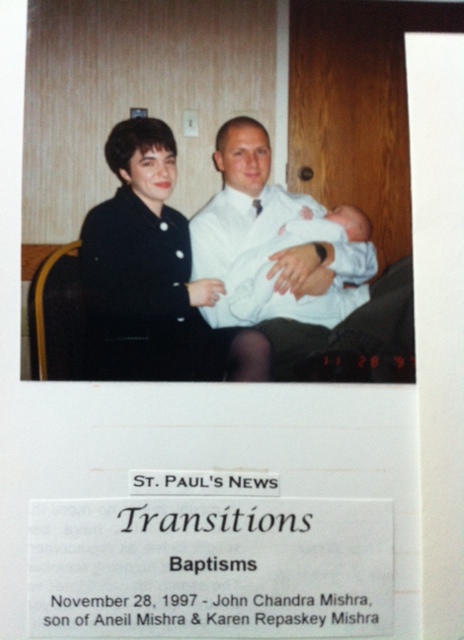
With all of the news lately about high-profile politicians whose marriages are in trouble due to infidelity, one would think that the institution of marriage in America is at an all-time low, and that Karen and I, who recently celebrated 24 years of marriage, are anomalies.  Not so, according to today Kay Hymowitz in today’s Wall Street Journal:

In any crisis, people tend to panic and forget basic facts. This meltdown is no exception. First and foremost, marital breakdown is not rampant across the land. It is concentrated among low-income and black couples. Americans seem to have a lot of trouble grasping this fact, probably because so much public space is taken up by politicians, celebrities and journalists with marriages on the skids. But in actuality, the divorce rate for college-educated women has been declining since 1980. Out-of-wedlock childbearing among the educated class remains rare. The bottom line is that higher-income, college-educated couples are far more likely to get married and stay married than their less-educated and lower-income peers. We shouldn’t go so far as to call Ms. Loh and Mr. Sanford, if he decides to return to the heart he left in Buenos Aires, outliers. But they do nothing to clarify a key problem facing the country, which remains the apartheid state of marriage.

The seemingly reasonable notion that marriage is crashing because we’re likely to live till 80 also doesn’t hold up. The typical divorce is not of a midlife couple bored with finishing each other’s sentences; it’s of a twosome who have just written the last thank-you note for wedding gifts. More than one-fifth of marriages break up within five years. The median age at first divorce is 30.5 for males and 29 for females. The risk of break-up goes up after one year of marriage and peaks at 4½ years. That’s right. A lot of Americans barely wait till the paint is dry in the new family room before setting out for more promising territory.

One of the many ironies of the institution is that marriage seems more satisfying to those who no longer have children in the house. If people simply grew more tired of each other over time, then we would expect that couples unloading the Explorer at the college dorm would head directly to the lawyer’s office. On the contrary, marital happiness increases once the kids are gone, despite the prospect of decades of dreary, pass-the-Maalox-dear evenings. A few years ago the AARP warned of a growing trend in “gray divorce”; others cautioned about the coming of “Viagra divorce,” as older men came to realize that, with a little chemical help, they could restart their engines. Didn’t happen. Empty-nesters still stay together for the duration, just as they did 40 years ago.

Perhaps it’s the declining hormones of late middle age. Perhaps it’s the joint pride of a difficult task completed. Maybe they’re satisfied with their investment, after all.

It is true that our two children have reduced our “personal time” as a couple to almost zero, for time, energy, and money reasons.  It is also true, however, that  they remind us daily why we did get married, as they shine lights on both our strengths and weaknesses.  In our parenting, professional work, and interactions with friends and family, Karen and I work to reinforce our individual and collective strengths, and help each other overcome our weaknesses.   One of my favorite poems is by Robert Browning, and I often quote from it in birthday and anniversary cards to Karen:

Grow old along with me!
The best is yet to be,
The last of life, for which the first was made:
Our times are in His hand
Who saith “A whole I planned,
Youth shows but half; trust God: see all, nor be afraid!”

Aneil

P.s.   For background on the poem, please go here.

Workshop on Blogging in Chicago This Summer

Karen and I will be participating in this upcoming workshop on blogging this summer, so we hope you will join us!

Aneil

——————————————————————————————————————————————————————————

Are you an Academy of Management Member and Management Scholar who is curious about the role that blogs can play in your professional world? Have you wondered how to find relevant blogs, create an efficient blog-reading practice, comment effectively on other people’s blogs, write for a group blog, or maybe even start your own blog? Join us at the Academy of Management for a workshop on  Blogging for Management Scholars: Why & How to Read Blogs, Write for Blogs, and Create your Own Blog, being held Friday, Aug 7 2009.

This workshop follows a modular format, broken into three phases that will teach members how to use blogs at three levels of increasing engagement, from reading to writing to publishing ones own blog. And, the workshop includes a group blogging opportunity that will run during and after the Academy meetings.

  • Phase 1 (8 am – noon) introduces the medium and the active community of management scholar blogs for those who want to read and comment on blogs effectively.
  • Phase 2 (1 pm to 3 pm) teaches participants how to find their niche, to adjust their writing paradigm, and to contribute to existing blogs as writers.
  • Phase 3 ( 3 pm – 6 pm) will have a smaller, limited enrollment. Phase 3 will teach the basics of creating your own blog.

The workshop combines informational presentations, a panel discussion by eight management scholar-bloggers, roundtable conversations, and hands-on exercises, as well as the open invitation to blog at www.InsightsToActions.com.

Pre-work (available online at www.InsightsToActions.com) will establish a basic level of understanding, and a post-session group-blogging experiment open to the Academy will let participants apply what they learn. Participants will clarify their blog-related scholarly opportunities, their blog community, their topical niche and their authorial voice. Participants will leave this workshop (1) aware of the opportunities that blogs offer management scholars, (2) able to identify, understand and use the major features of a blog, (3) understanding the array of blogs being published by management scholar colleagues, and (4) able to participate at their desired level of engagement.

Pre-registration is requested, at https://secure.aomonline.org/PDWReg. Colleagues interested in participating in the limited-enrollment Phase 3 of the Workshop should contact CV Harquail directly, at cvharquail@AuthenticOrganizations.com. The deadline to register online is July 10, 2009.

When is it okay, and not okay, to touch someone else in the workplace?

I’m a high-touch person, and always have been.  Perhaps it is my upbringing, where both sides of my family, my Indian father and my American mother, and our extended family and close friends were also high-touch people.  So, I’ve always been one to give and receive hugs, back-slaps, handshakes, and kisses on the cheek, both with close friends as well as acquaintances.  I pride myself that I can act as an Indian, a Latin, or a Middle Easterner because of the value placed on chaste displays of affection, especially among kin and close friends.  I realize that not everyone is like me, however, and so I am considerate of other people or other cultures with norms different than my own.  (As someone who has close definitions of personal space, and tending to be a close talker I don’t always remember to give others sufficient personal space, as Karen regularly reminds me.)

So I was intrigued when I read a column in today’s Wall Street Journal on this subject:

Every workplace seems to have at least one “toucher”—someone constantly doling out hugs, shoulder rubs or high fives. Some people hate this attention and quickly put an end to it. For better or worse, that leaves a lot more love for the rest of us.

But is it ever really OK to put your hand on someone else in the office, even in friendship and support?

It depends whom you ask. Corporate lawyers and human-resource types say we should always keep our hands to ourselves in the workplace. After all, touch is subjective. One person’s friendly pat can quickly turn into another’s threatened lawsuit.

So what are the norms in your workplace, and what are you suggestions for building trust while remaining respectful and considerate when it comes to touch?

Aneil

Contrasts Between Buffalo Crash and Hudson River Safe Landing Shows That Experience, Enforcing Training Standards and Discipline, and Checklists Matter in Averting and Dealing with Crisis

Checklists may help avert disasters, but may not be useful when actually dealing with a crisis or disaster as it unfolds, based on testimony from the captain the of Hudson River, NY safe landing reported in today’s Wall Street Journal:

Many of the flight attendants and passengers thought the Airbus was headed for land. But Capt. Sullenberger, who started flying at the age of 16 and has been at the controls of everything from gliders to three different jetliners, told the safety board he picked his landing spot with care.

The airline’s training instructed pilots that if they ever had to ditch, they should “land near vessels to try to facilitate rescue.”

Responding to questions about the lessons to be learned from the extraordinary landing, Capt. Sullenberger mentioned training to help pilots work together as a team and additional efforts to improve emergency evacuations. But his comments repeatedly swung back to the notion of an airline culture that stresses safety and respects the judgment of experienced pilots. US Airways pilots received classroom instruction in ditching procedures, but Capt. Sullenberger testified that they never practiced any ditching scenarios in simulators.

In a pointed remark on the cost-cutting and heightened corporate regimentation that currently drive many airlines, Capt. Sullenberger considered the intangibles of safe airmanship. “The captain’s authority is a precious commodity that cannot be denigrated,” he said.

The captain’s testimony also highlighted the importance of relying on experience and memory, rather than rigidly using written checklists to deal with unexpected emergencies. With both pilots in the cockpit boasting about 20,000 hours of total flight time, Capt. Sullenberger said that teamwork and experience “allowed us to focus on the high priorities without referring to written” checklists.

Original Post 5-12-09:

This from today’’s Wall Street Journal:

The pilots of the Continental Connection turboprop that crashed in February near Buffalo, N.Y., rushed through mandatory checklists in a matter of seconds, but spent almost the entire 59-minute flight from Newark, N.J., bantering about personal issues, job goals and the hazards of ice accumulation during winter flying, according to the cockpit recorder transcript released Tuesday by federal investigators.

The transcript shows that the Colgan Air Inc. crew, Capt. Marvin Renslow and co-pilot Rebecca Shaw, violated mandatory safety rules by discussing extraneous topics during the descent to Buffalo, just before their twin-engine Bombardier Q400 aircraft slowed dangerously and went into an aerodynamic stall, killing 50 people.

Data released by the National Transportation Safety Board indicate that the stall wasn’t triggered by ice accumulation, but rather by Capt. Renslow’s pulling back on the controls and overpowering an automatic stall-protection system that was pushing the nose of the plane down in order to regain a safe flying speed.

The transcript of conversations reflects a breakdown in cockpit discipline as the pilots laughed and joked extensively about previous flying experiences, the rigors of commuting to work by air and their own shortcomings as aviators.

There was hardly any discussion, until the last few minutes, about the conditions of the flight they were operating. Immediately after completing required checklists, the pilots resumed extraneous discussions.

People close to the probe said Capt. Renslow had flunked numerous check rides as part of his training. A Wall Street Journal article on Monday reported that investigators believe that during the flight, which departed from Newark, N.J., he may have reacted in an improper way because he hadn’t been adequately trained to use emergency equipment intended to prevent the Bombardier Q400 from going into a deadly stall.

In the wake of the crash, Colgan faces heightened regulatory scrutiny, including investigations by the Federal Aviation Administration, of potential crew-scheduling violations. Since the accident, FAA officials overseeing Colgan have issued at least 16 letters of investigation questioning the carrier’s compliance with flight-time and duty-time regulations, according to people familiar with the details. The inquiries cover the period from November 2008 to March 2009.

The importance of following checklists to airline safety has been discussed in this blog previously.

The pilots’ inexperience also appears to have compounded their several mistakes:

Pilots at the controls of the commuter plane that crashed Feb. 12 in Buffalo, N.Y., spent their last few moments bantering about their inexperience and lack of expertise in coping with the icy conditions they faced that night, a transcript from the flight showed.

All 49 people aboard Continental Connection Flight 3407 were killed, along with one on the ground. The flight, which originated in Newark, N.J., was operated by Colgan Inc., a unit of Pinnacle Airlines Corp., but flew under the Continental Connection banner, a regional service which ferries passengers to and from Continental Airlines hubs.

Four minutes before the crash, and just before rushing through the descent checklist, the crew talked about a dramatic buildup of ice around the windshield. “Oh yeah, it’s lots of ice,” said co-pilot Rebecca Shaw, 24 years old. Said 47-year-old Capt. Marvin Renslow: “That’s the most I’ve seen…in a long time.”

But the crew didn’t discuss a plan in case of emergency, instead trading personal anecdotes about icing. “I had more actual time [experiencing icing] on my first day” with Colgan “than I did in the 1,600 [flight] hours I had when I came here,” said Ms. Shaw.

What a horrible tragedy.

Aneil

GM Bankruptcy: Let’s Put on the Brakes

The Federal Government’s plan to force GM into bankruptcy and to own 70% of the company’s stock afterwards is a government takeover of unprecedented and historic proportions.  Before this happens, there are too many unanswered questions that should be answered, and Ralph Nader and Robert Weissman raise many good ones in today’s Wall Street Journal:

Millions of people in communities across the country depend on the government getting the GM rescue right. That’s why it is startling — and mistaken — for the future of GM to rest with a small, largely unaccountable, ad hoc task force made up of a handful of Wall Street expats.

A congressional abdication of authority of historic proportions has left the executive branch with nearly complete discretion over how to handle GM and Chrysler’s restructuring. President Barack Obama has further delegated authority, giving effective control to this task force, which operates under the titular authority of a top-level interagency group headed by National Economic Council Director Larry Summers and Treasury Secretary Tim Geithner.

In the days before an avoidable June 1 bankruptcy filing, it is imperative that Congress honor its constitutional duties and demand that the GM restructuring deal be sent to it for deliberative review — before any irreversible measures, such as a voluntary bankruptcy declaration, are taken. This means delaying any precipitous decisions until after Congress returns from its Memorial Day recess.

I agree that this restructuring of General Motors must be done right, and right now with the little information the public has been provided about the deliberations about and future plans for GM that the Federal Government has, I don’t see how we can be confident that it will all work properly, and without huge costs to taxpayers and communities both.

Aneil

F.A.O. Schwarz still exciting to our 11-year old

The NY Times reports that Toys “R” Us (can’t get my computer to make a backwards R) will buy F.A.O. Schwarz.  We were just at the NYC flagship store this past weekend.  In planning our one-day excursion into the city, everyone got to pick one things to do–on Jack’s list—go to F.A.O. Schwarz!  I didn’t know he knew that store was there, but we found it on 5th Avenue across from the Plaza Hotel.

He and I spent about an hour wandering around, trying to pick the perfect item to take home while Aneil and Maggie found a quiet spot to sit and wait.  Jack found a lego set he’s been wanting, but it was too large to carry through the city, so we got it from Target once we got home–and saved about $15.00.

At least he got his F.A.O. Schwarz experience and it sounds like others will too now that Toys “R” Us will take it over.

-karen

Customer Satisfaction Alone is Not Sufficient Evidence for Trust

This article was recently published by our new friend and colleague in the Trust world, Deborah Nixon:

The strategy most organizations use to assess trust levels is to conduct a customer satisfaction survey. While these surveys are necessary, it is not a sufficient measure.

There are three reasons why:

* First, satisfaction takes a rear-view perspective and is transaction-based. It asks an existing customer how they found your service after they completed their transaction with you.

It doesn’t speak to whether they intend to return in the future and it certainly doesn’t speak to the unhappy, dissatisfied or cynical customer whose business you will never know you lost or never had an opportunity of having.

* Second, satisfaction is but one element of a trusting relationship. Trust is deep, lasting and relationship-based. It takes time to build and, once damaged, is difficult if not impossible to recover.

* Third, while loyalty questions begin to get closer to issues of trust they don’t reveal what the person is loyal to. Often, the person is loyal to their contact at a firm but not necessarily to the firm itself. It is critical that a business own its customer and to understand how to do that, they need to understand what underlies loyalty. An institution is too vulnerable if trust resides only with select employees. When they leave, customers leave.

These are all very good points to consider when trying to build trust and loyalty with both employees and customers.  We look forward to reading more from Dr. Nixon in the future.

Aneil

Social Media Marketing Hands-On Workshop in New York City

This announcement is on behalf of one of my fellow Princeton alumni:

SOCIAL MEDIA MARKETING HANDS-ON WORKSHOP on June 16, 2009

In this comprehensive, hands-on workshop Maisha Walker “The Internet Strategist” for Inc. magazine and founder of message medium will help you step-by-step build out your Facebook, LinkedIn & Twitter pages with the features you need to turn them into marketing tools. You will also establish your ongoing SMM strategy and launch your updates action plan in class. This is a hands-on instruction class where each entrepreneur will have his/her own computer with Internet access to work on and follow our guidance. Our classes sell out at 70 students.

This class is limited to only 20 for more personal attention.

Date: Tuesday, June 16, 2009
Time: 6:00pm – 9:00pm
Location: West 23rd Street, Manhattan (full address with confirmation)
Investment: $150
Register for the Workshop: http://messagemedium.com/classes/social_media_marketing_how.htm

Maisha Walker president message medium ph: (800) 592-7056 x605 fx: (212) 202-6121 em: maisha@messagemedium.com

Web Site Design . Development . Marketing . Maintenance http://www.messagemedium.com

Build a digital presence Read my column on Inc.com: http://www.inc.com/ecommerce

Follow my Small Biz Internet Ramblings on Twitter: http://www.twitter.com/messagemedium http://www.twitter.com/maishawalker

Take my Web Site, eCommerce or Internet Marketing Class: http://www.messagemedium.com/classes.htm

Bankers: “I See Dead People…and They’re Making Us Rich!”

Just when I thought I’d read EVERYTHING, and couldn’t imagine another horrendous example of greed and disgusting behavior by an institution, banking, that used to be trustworthy, comes this story from the Wall Street Journal no less on how banks make money of their dead employees to help pay their executive bonuses:

Banks are using a little-known tactic to help pay bonuses, deferred pay and pensions they owe executives: They’re holding life-insurance policies on hundreds of thousands of their workers, with themselves as the beneficiaries.

Banks took out much of this life insurance during the mortgage bubble, when executives’ pay — and the IOUs for their deferred compensation — surged, and banking regulators affirmed the use of life insurance as a way to finance executive pay and benefits.

Bank of America Corp. has the most life insurance on employees: $17.3 billion at the end of the first quarter, according to bank filings. Wachovia Corp. has $12 billion, J.P. Morgan Chase & Co. has $11.1 billion and Wells Fargo & Co. has $5.7 billion. (Wells Fargo acquired Wachovia at the end of last year.)

The insurance policies essentially are informal pension funds for executives: Companies deposit money into the contracts, which are like big, nondeductible IRAs, and allocate the cash among investments that grow tax-free. Over time, employers receive tax-free death benefits when employees, former employees and retirees die.

Though not improper, the practice is similar to what is known as “janitors insurance,” an insurance-on-employees technique that has long been controversial. Critics say the banks’ insurance contracts are a way for companies to create tax breaks for funding executive pensions. And some families have complained that employers shouldn’t profit from the deaths of their loved ones.

In December, Irma Johnson accidentally received a check for $1.6 million, from Security Life of Denver Insurance Co., payable to Amegy Bank. According to a lawsuit Mrs. Johnson filed in February in a Houston state court, in 2001 the bank told her husband, Daniel Johnson, a credit risk manager who had survived two brain surgeries, that he was eligible for supplemental life insurance of $150,000, if he signed a consent form authorizing the bank to purchase an insurance policy on his life. Four months later, the bank fired him.

Mr. Johnson died from a brain tumor at age 41 in 2008. His widow and two young children received no life-insurance benefits, which the bank had canceled when Mr. Johnson left. Mrs. Johnson says her husband was cognitively disabled when he signed the consent form.

A spokeswoman for Amegy Bank, a unit of Zions Bancorp, declined to comment on the suit, but said, “Participation in Amegy’s BOLI plan was completely voluntary; employees consented to participate.”

Here’s the Fox Business News video take on this practice.

As Peter Finch said, “I’m mad as hell, and I”m not going to take it any more!”

Please write your Senator or Member of Congress so that legislation can be written to eliminate this disgusting, immoral, and thoughtless practice.

Aneil

Determined and Dependable CEOs Win the Day

David Brooks of the New York Times had this to say yesterday:

In other words, warm, flexible, team-oriented and empathetic people are less likely to thrive as C.E.O.’s. Organized, dogged, anal-retentive and slightly boring people are more likely to thrive.

These results are consistent with a lot of work that’s been done over the past few decades. In 2001, Jim Collins published a best-selling study called “Good to Great.” He found that the best C.E.O.’s were not the flamboyant visionaries. They were humble, self-effacing, diligent and resolute souls who found one thing they were really good at and did it over and over again.

That same year Murray Barrick, Michael Mount and Timothy Judge surveyed a century’s worth of research into business leadership. They, too, found that extroversion, agreeableness and openness to new experience did not correlate well with C.E.O. success. Instead, what mattered was emotional stability and, most of all, conscientiousness — which means being dependable, making plans and following through on them.

This is why Reliability is the first piece of the ROCC of Trust.  If people can’t depend on you to follow through on your commitments, if they can’t see you as someone who will stick with them when the going gets tough, they won’t stay around you long enough to find out if you care about them as individuals.  This is also why Competence is the second piece of the ROCC of Trust.  If people don’t believe you have what it takes to make the organization better, then they won’t be willing to entrust their livelihoods to you.

Humble and hardworking are key hallmarks of leaders who go on to build the ROCC of Trust.  This is what we found in our own research on trustworthy leaders who create lasting success.  As only one example, Mary Ellen Sheets and her children have spent more than two decades building up the $200 million enterprise Two Men and Truck, International.  They had to weather challenging business cycles, invent entirely new ways of doing business,discipline rogue franchisees, and battle relentless efforts by competitors and politicians to keep them from expanding into new states.  Much like the pioneers who settled the American West, they refused to give in to those who said it couldn’t be done, and didn’t turn back when most of us would have said enough!  As a result, they have made moving household and commercial goods a pleasant and cost-efficient experience, rather than the nightmare it used to be before they created Two Men and a Truck.  For more, see our book!

Aneil